
Our Research
Tumour Cell Dormancy and Persistence
Tumour cell dormancy and long-term persistence form the central research focus of the group. Dormant cancer cells are non-proliferative or slowly cycling cells that can survive therapy and remain clinically undetectable for extended periods. Their eventual reactivation is a major driver of local and metastatic relapse, and represents one of the most significant unresolved challenges in modern oncology.
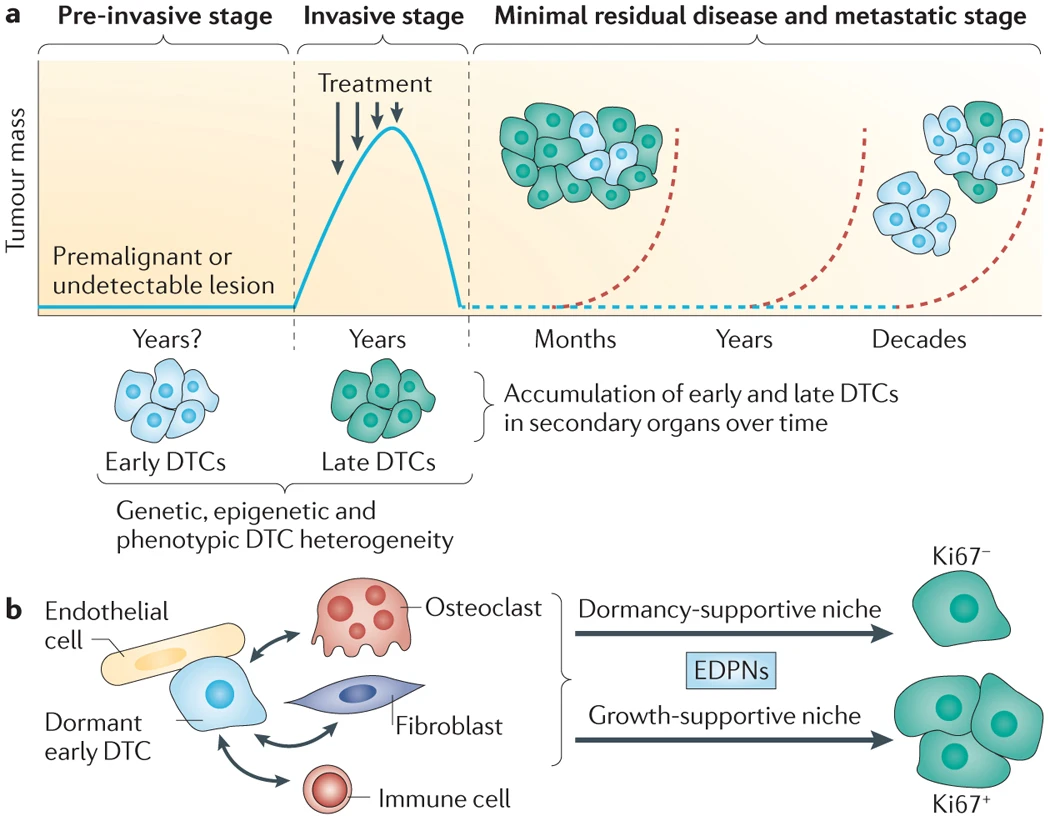
Sosa, M.S. et al. (2014) Mechanisms of disseminated cancer cell dormancy: an awakening field
Our work seeks to understand how cancer cells enter, maintain, and exit quiescent states, enabling them to evade therapy and ultimately drive metastatic relapse. We combine computational analysis of large-scale omics datasets with experimental biology and clinical collaboration to identify key regulatory pathways and therapeutic vulnerabilities associated with dormant cell populations.
This programme builds on the long-standing research of Dr Quayle, whose work since his PhD has focused on the biology of mitotically quiescent and dormant cancer cells. Through the development and characterisation of experimental models of tumour dormancy, alongside transcriptomic and computational analyses, this work established a foundation for understanding the molecular drivers of cancer cell persistence.
In Sheffield, this research is now led and expanded as a core programme of the group, integrating bioinformatic modelling with experimental approaches to dissect the signalling pathways and cellular states that enable tumour cells to survive treatment and re-initiate disease. Our long-term aim is to identify actionable targets to eliminate dormant tumour cell populations and prevent metastatic relapse.
Survival Analysis and Prognostic Modelling
Survival analysis forms a key methodological focus of the group. It provides a framework for linking molecular and clinical features to patient outcomes; however, current approaches often rely on arbitrary stratification of continuous variables such as gene expression. These practices can obscure clinically meaningful signals, reduce reproducibility, and limit the identification of potentially valuable biomarkers.
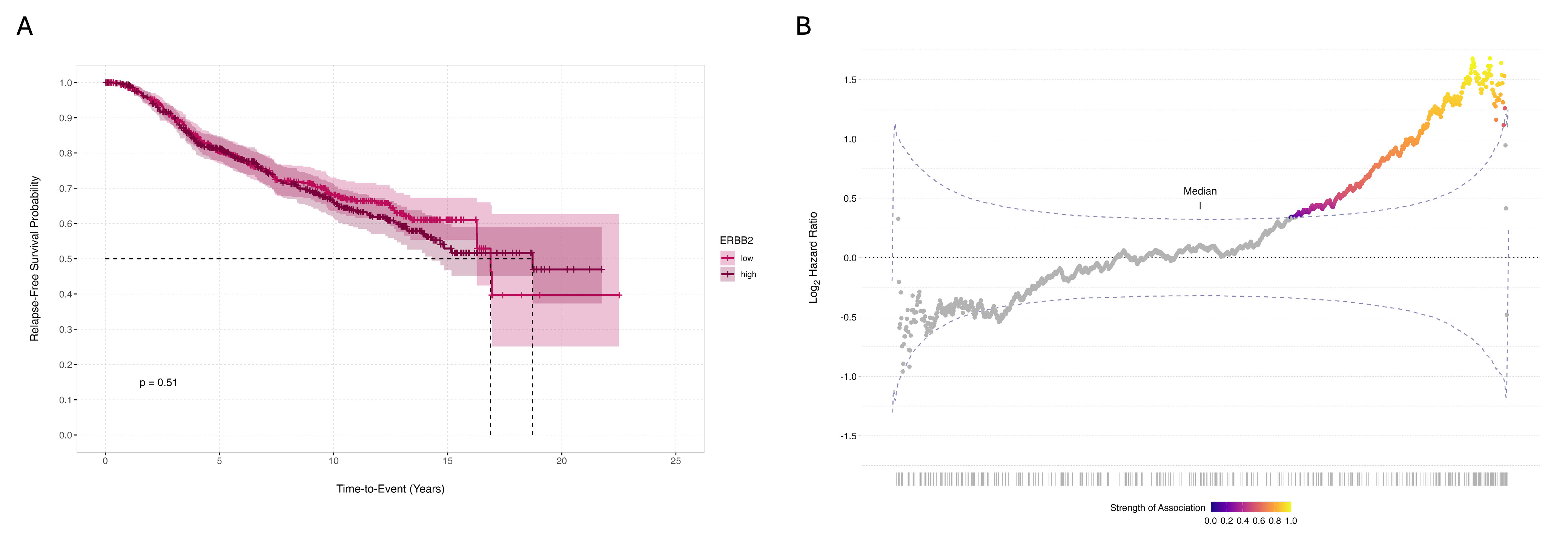
Naeemaee, R. et al. (2026) Innovations in Biomarker Stratification for Precision Oncology
Median splits in survival analysis can miss real prognostic signals. In this example, a median split of ERBB2 gives a false-negative survival result (A), whereas exhaustive analysis across all possible cut points identifies multiple thresholds associated with outcome (B). This figure is particularly instructive given that ERBB2 encodes HER2 - the therapeutic target of trastuzumab (Herceptin) - and that METABRIC is one of the largest and most clinically representative open-access breast cancer datasets. This highlights the importance of data-driven approaches for analysing continuous biomarkers in cancer.
Our work develops robust, data-driven multivariate survival modelling frameworks that more accurately reflect the underlying biology and clinical heterogeneity of cancer. These approaches enable comprehensive assessment of continuous biomarkers while accounting for their distribution and relevant clinical covariates, improving the reliability of biomarker validation across independent datasets. By integrating large-scale molecular and clinical datasets, we aim to improve risk stratification, identify prognostic biomarkers, and better understand the factors influencing treatment response across diverse patient cohorts.
These methods are being translated into open-source software and accessible analytical platforms to support their adoption by both researchers and clinicians, with the long-term aim of improving the precision of patient stratification in cancer.
Cross-Kingdom RNAi in Cancer
This programme explores the emerging role of cross-kingdom RNA interference in cancer and host–microbiome biology, with a particular focus on colorectal cancer. Increasing evidence suggests that small regulatory RNAs, including microRNAs and bacterial small RNAs, can be transported via extracellular vesicles and influence gene expression across biological kingdoms, representing a previously underexplored layer of regulation within the tumour microenvironment.
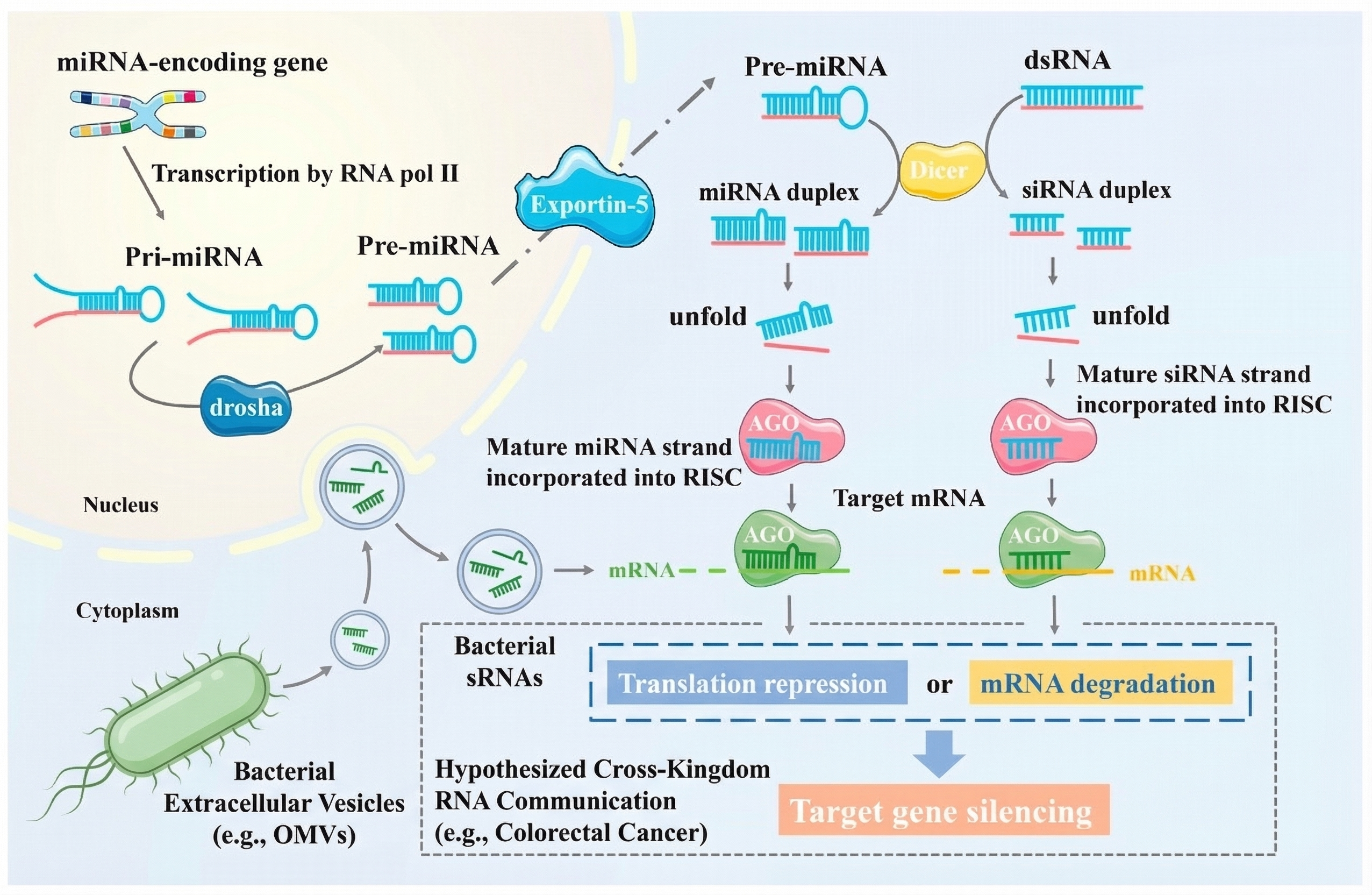
Bidirectional Cross-Kingdom RNAi as a Signalling Mechanism. In addition to canonical miRNA and siRNA pathways, small regulatory RNAs may mediate communication between host cells and microbial communities. Host-derived microRNAs can be exported in extracellular vesicles and influence microbial gene expression, while bacterial small RNAs delivered to host cells may engage the RNAi machinery in a miRNA-like manner. Together, these processes represent a hypothesised mechanism of interspecies gene regulation within the tumour microenvironment, particularly in colorectal cancer.
Our work investigates both host-to-microbe and microbe-to-host signalling in the context of colorectal cancer, examining how tumour-derived RNAs may alter microbial behaviour and, conversely, how microbial RNAs may interact with host regulatory pathways. We develop bioinformatic pipelines to detect, quantify, and characterise these signals, and to predict potential cross-kingdom RNA-target interactions at scale, enabling systematic evaluation of their biological plausibility and relevance to disease progression.
A central focus of this programme is the development of reproducible, community-aligned computational frameworks that allow these hypotheses to be tested rigorously. By integrating transcriptomic, genomic, microbiome, and extracellular vesicle datasets, we aim to uncover novel mechanisms of interspecies communication in colorectal cancer and generate testable hypotheses for experimental validation.
Collaborative Projects
We work closely with academic, clinical, and translational partners across a range of cancer research programmes. Our collaborations include contributions to large-scale genomics initiatives, such as projects within Genomics England’s 100,000 Genomes Project, as well as bioinformatic support for clinical trials, including the GUSTO phase II study in urothelial cancer. Our collaborative portfolio spans bladder and ovarian cancer genomics, predictive modelling of treatment responses in multiple malignancies, and the integration of clinical and molecular datasets to inform patient stratification.
Alongside these major programmes, we contribute to a broad range of interdisciplinary projects, applying expertise in cancer biology, data science, and bioinformatics to address clinically relevant questions. We place a strong emphasis on reproducibility, open science, and the development of scalable analytical workflows to maximise impact across the cancer research community.